Too low to do anything? Psychiatrist Dr Tracey Marks on behavioural activation for depression
Behavioural activation for depression: psychiatrist Dr Tracey Marks explains why acting before you feel ready can lift mood, step by step, in an 8-minute video.
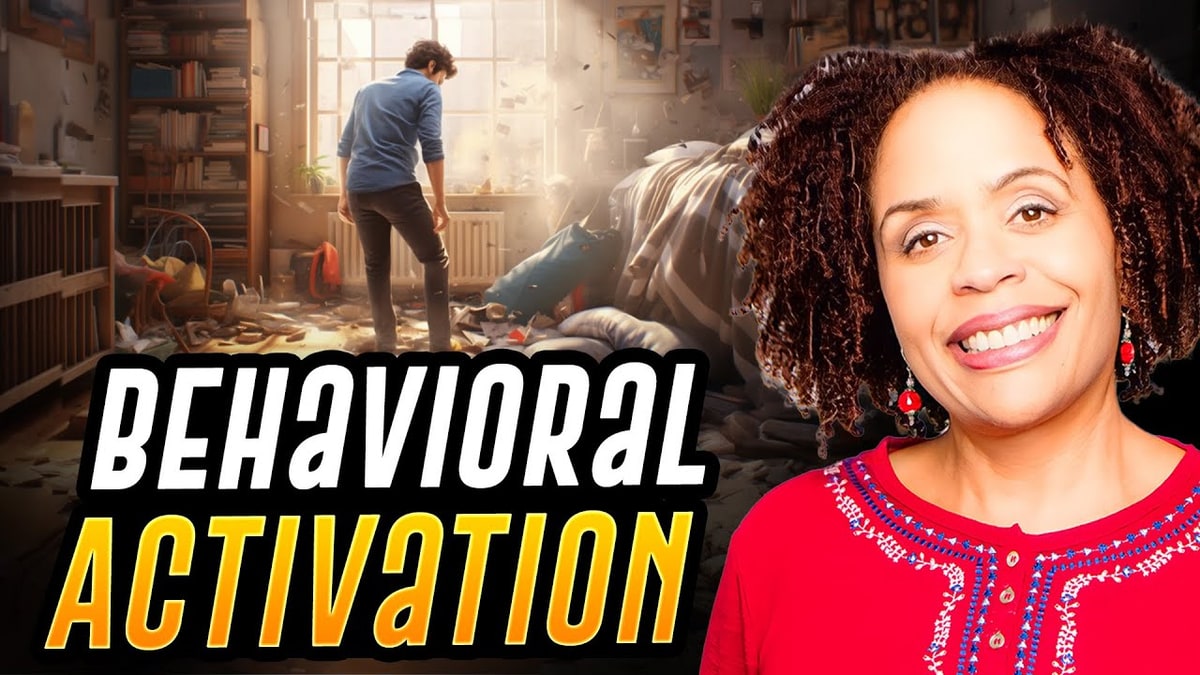

When depression drains your motivation, waiting to feel better before you do anything can keep you stuck. US psychiatrist Dr Tracey Marks explains behavioural activation, a well-studied therapy that works the other way round: change what you do first, and mood tends to follow. Her short video is above in full.
The short version
- Depression runs in a loop: low mood leads to withdrawal, fewer rewarding moments, and then lower mood.
- Behavioural activation breaks the loop through action, not by arguing with your thoughts.
- Step one is a week of tracking: what you did each morning, afternoon and evening, and your mood from 1 to 10.
- Then look for patterns between activity and mood, and list what matters to you.
- Schedule small, planned activities, including dull essentials like laundry and bills.
- Motivation often comes after the action, not before it, and the change is gradual.
What does Dr Tracey Marks say about behavioural activation?
Marks starts with the cycle many people with depression know. As mood drops, people pull back from friends, hobbies and even daily tasks. That inactivity cuts off the small rewards that normally lift mood, which deepens the loneliness and hopelessness.
Behavioural activation, she explains, is a purely behavioural form of cognitive behavioural therapy. You do not wait for motivation. You plan and do activities, and the sense of connection or achievement they bring gradually feeds back into how you feel.
Her method has a clear order. First, monitor yourself for a week, splitting each day into morning, afternoon and evening, writing what you did and rating your mood, soon after each activity so memory does not blur it. Then review the week: when was your mood best or worst, and which activities gave you connection or a sense of accomplishment? Next, reflect on your values, build a list of activities that fit them alongside the essentials, and schedule them in a planner.
She is honest that improvement is not immediate. If you struggle, she suggests asking a friend or family member for ideas or to hold you accountable, or working with a therapist on a plan.
Does behavioural activation work?
The evidence is good. A 2014 review of 26 randomised trials, published in PLOS One, found behavioural activation reduced depression symptoms more than control conditions, though the authors noted that many of the studies were of low quality. The World Health Organization lists it among effective psychological treatments for depression.
It also has a Pakistani track record. A WHO-backed programme called Problem Management Plus, which includes behavioural activation, was tested in a randomised trial in three primary care centres in Peshawar, delivered by trained lay workers. Three months after treatment, people who received it had lower anxiety and depression scores than those who got enhanced usual care.
Our take
The appeal for Pakistan is cost. Behavioural activation needs a notebook, not an expensive therapist every week, although guidance helps. Plan around real life: load-shedding hours, prayer times and family routines make natural anchors for scheduled activities. Keep the first steps tiny. When depression is heavy, “shower and sit outside for ten minutes” is a real achievement.
It is not a replacement for care when depression is severe. If you cannot function, or the low mood has lasted more than two weeks, see a doctor.
Try this today
- Draw three boxes for today: morning, afternoon, evening. Note what you did and rate your mood 1 to 10.
- Choose one small activity that used to make you feel connected or useful, and give it a time tomorrow.
- Tell one person your plan and ask them to check in.
This article is for general information and is not medical advice. If you are having thoughts of harming yourself, please reach out today to the Umang Pakistan helpline, a doctor, or someone you trust.
Sources
- Dr. Tracey Marks: The Hidden Weapon Against Depression: Behavioral Activation Explained (YouTube)
- PLOS One: Behavioural Activation for Depression; An Update of Meta-Analysis of Effectiveness and Sub Group Analysis (2014)
- WHO: Depressive disorder (depression) fact sheet
- Keele University: Effect of a multicomponent behavioral intervention in adults impaired by psychological distress in a conflict affected area of Pakistan (Rahman et al., 2016)
This story was researched and drafted with AI assistance, then checked and edited by our editor before publishing.