Does every unanswered text feel like rejection? Dr Sharon Saline on RSD and social anxiety
Rejection sensitivity and social anxiety: psychologist Dr Sharon Saline explains why small slights hurt so much and gives skills to stop the shame spiral.
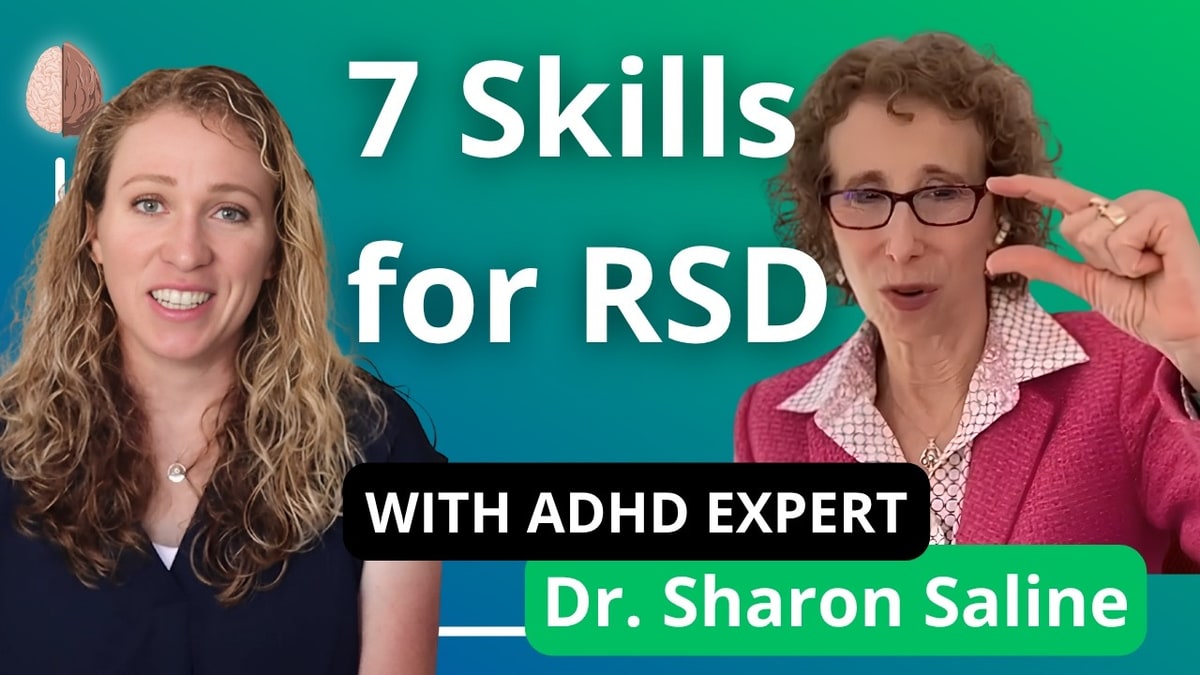

If a ‘seen’ with no reply or one small comment from your boss can ruin your whole day, you may be dealing with rejection sensitivity. Clinical psychologist Dr Sharon Saline, who specialises in ADHD, explains it with therapist Emma McAdam on Therapy in a Nutshell, along with practical skills to calm the spiral. The video above plays the first ten minutes, where the idea and the first skills are explained.
The short version
- Rejection sensitive dysphoria (RSD) is the term used for intense emotional pain after real or perceived rejection or criticism.
- It is not an official diagnosis, but it is widely discussed alongside ADHD and social anxiety.
- Skill one is “QTIP”: Quit Taking It Personally. Most delays and moods are about the other person’s day, not you.
- Get another perspective from someone you trust before you act on the hurt.
- Separate what happened from the story your mind tells, and own your part without blaming yourself for everything.
- Swap “I’m a terrible person” for “I can learn a new skill”.
What does Dr Sharon Saline say about rejection sensitivity?
Saline and McAdam start with the experience many viewers know: an unanswered message or a mild criticism sets off thoughts like “nobody likes me” or “what’s wrong with me?” The pain can be out of proportion to what happened, and the reaction can arrive before you have had time to think.
They then separate RSD from social anxiety and look at why it shows up so often with ADHD, where fast thinking and difficulty regulating emotions can turn a small sting into a flood. Saline’s practical answer comes in steps, starting with QTIP, quit taking it personally, and checking your reading of a situation with another person, especially if your brain tends to jump to conclusions. She also suggests remembering the strengths that come with an ADHD brain rather than seeing yourself only through your struggles.
Later in the conversation, both women share personal stories of friendships ending, and Saline adds four more skills: a growth mindset, compassionate self-acceptance, an honest look at who contributed what to a painful situation, and using a healthy distraction to break out of hyperfocus on the hurt.
How is this different from social anxiety?
In our reading, the simplest way to tell them apart is timing. The NHS describes social anxiety as a strong, lasting fear of social situations, often before and during them, with worry about being judged. Rejection sensitivity is mostly about the pain after something feels like rejection. They feed each other: if criticism hurts that much, avoiding people starts to look safer.
Our take
The skills here are standard tools from cognitive behavioural therapy and self-compassion work, which have good evidence behind them for anxiety. RSD itself is less settled. It is a useful label for a real experience, but it is not in the diagnostic manuals, and research on it is still early, so treat it as a description, not a diagnosis.
For Pakistani readers, the triggers are familiar: family WhatsApp groups where one comment lands badly, a teacher’s remark in front of the class, rishta conversations where someone’s silence says a lot. Our culture also tends to read a slow reply as disrespect, which makes QTIP harder and more useful.
If these feelings come with long periods of low mood, or you think you may have ADHD, an assessment by a psychiatrist or clinical psychologist is worth more than any video.
Try this today
- Next time a reply is late, write two other reasons it could be late before you react.
- Text a trusted friend: “Am I reading this right?”
- If you are stuck replaying it, do ten minutes of something absorbing, like a walk, cooking or a game, and then come back to it.
This article is for general information and is not medical advice.
Other parts of the conversation
Sources
This story was researched and drafted with AI assistance, then checked and edited by our editor before publishing.