Netanyahu's map puts Pakistan in a 'Sunni Diamond' bloc: what it shows and where it came from
Israel's PM showed a map placing Pakistan with Turkey, Saudi Arabia and Egypt, opposite an Israel-UAE 'Hexagon'. It came from a German think tank.
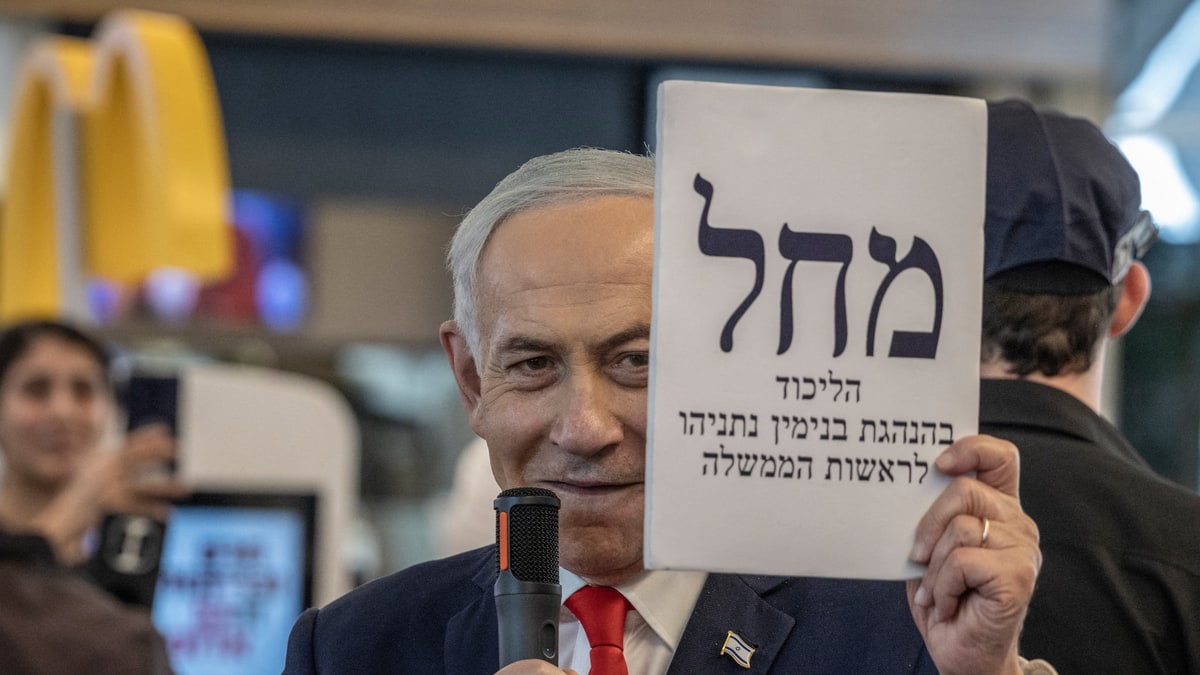
A map shown by Israeli Prime Minister Benjamin Netanyahu has gone viral in Pakistan, because it puts Pakistan right in the middle of a rival bloc.
Where it was shown
Netanyahu displayed the map at a two-hour security briefing on October 18 to set out Israel’s new national security doctrine, his first in-person media security briefing since the October 7, 2023 attacks. Some major Israeli outlets boycotted it. Israel votes in a general election on October 27.
What the map shows
The map is titled “Geopolitical alliances in the Middle East”. According to Newsweek:
- Blue: the “Israel-UAE Hexagon alliance”, with Greece, Ethiopia and Somaliland shaded as friendly.
- Dark green: the “Sunni Diamond Alliance” of Pakistan, Turkey, Saudi Arabia and Egypt, with Sudan, Syria and Jordan as friendly.
- Purple: Iran and its “Axis of Resistance”, with Russia and parts of Iraq as friendly.
Pakistan, Turkey and Saudi Arabia did sign the Mecca mutual defence pact in August, which helps explain why the map groups them together.
Netanyahu didn’t draw it
The map was not made by Israel. It was published in May 2026 by Germany’s Friedrich-Ebert-Stiftung, a think tank linked to Germany’s centre-left SPD party, as an analysis of shifting alignments from Libya to India. Netanyahu presented it during his own speech.
He has previously talked about a “hexagon of alliances” that would include India, Greece and Cyprus. Defending his record, he said: “We changed the Middle East because we changed ourselves.”
What critics say
- Andreas Krieg of King’s College London told Newsweek the map is “far more revealing than he probably intended”, because it shows Israel isolated from the region’s big powers, and that Netanyahu presented speculative analysis as doctrine.
- Yoram Meital of Ben-Gurion University called Netanyahu’s story “highly selective”.
What it means for Pakistan
Pakistan does not recognise Israel, so being placed in a rival bloc is not news in itself. What is new is a sitting Israeli leader publicly treating Pakistan as part of an organised Sunni grouping with Saudi Arabia and Turkey. That fits with Pakistan’s recent defence deals, from the Mecca pact to this week’s Badr industry agreement.
We found no official response from Pakistan’s Foreign Office so far. And a map is not an alliance: analysts point out that drawing countries in the same colour does not mean they act together.
Sources
This story was researched and drafted with AI assistance, then checked and edited by our editor before publishing.