Iran warns of 'new targets' as it points to 7 internet cables under Hormuz: could Pakistan's internet be hit?
An IRGC spokesman said seven major internet cables run under the Strait of Hormuz and hinted at new targets. What was said, and what it means for Pakistan.
Iran’s Revolutionary Guards have raised a new kind of threat in the Gulf: the undersea cables that carry the world’s internet.
What Iran said
On Monday, October 19, IRGC spokesman Hossein Mohebbi said, according to The Express Tribune and Reuters:
“Seven major internet cables run beneath the Strait of Hormuz.”
He claimed that internet and commercial data traffic depend on them, and warned that “new targets will be unveiled” along with new weapons. An IRGC official quoted by Russia’s TASS agency added that if war resumes, “this time our response will be much harsher” and the world would face “a severe energy crisis”.
Earlier this month, Mohsen Rezaei, secretary of Iran’s Supreme National Security Council, said Tehran could target undersea cables, data centres and AI facilities linked to the US in a new war, adding: “We have not yet included these assets among our targets.”
Important: these are threats, not attacks. No damage to any cable has been reported.
Why tensions are high
- The US and Israel went to war with Iran on February 28, TASS notes.
- In June, the US and Iran signed the Islamabad Memorandum of Understanding, a framework for talks, The Express Tribune reports.
- Talks later broke down over security guarantees and shipping through Hormuz, and the US resumed strikes on July 8.
- On Tuesday, the IRGC claimed it shot down a US MQ-9 drone over the strait. That claim hasn’t been independently confirmed.
Could it affect Pakistan’s internet?
Pakistan’s international internet traffic mostly travels through submarine cables landing in Karachi, which link the country to the Gulf, Europe and Asia. Some of these routes pass through or near Gulf waters. If cables in the region were cut, users in Pakistan could see slower speeds or outages, as happened in past cable faults.
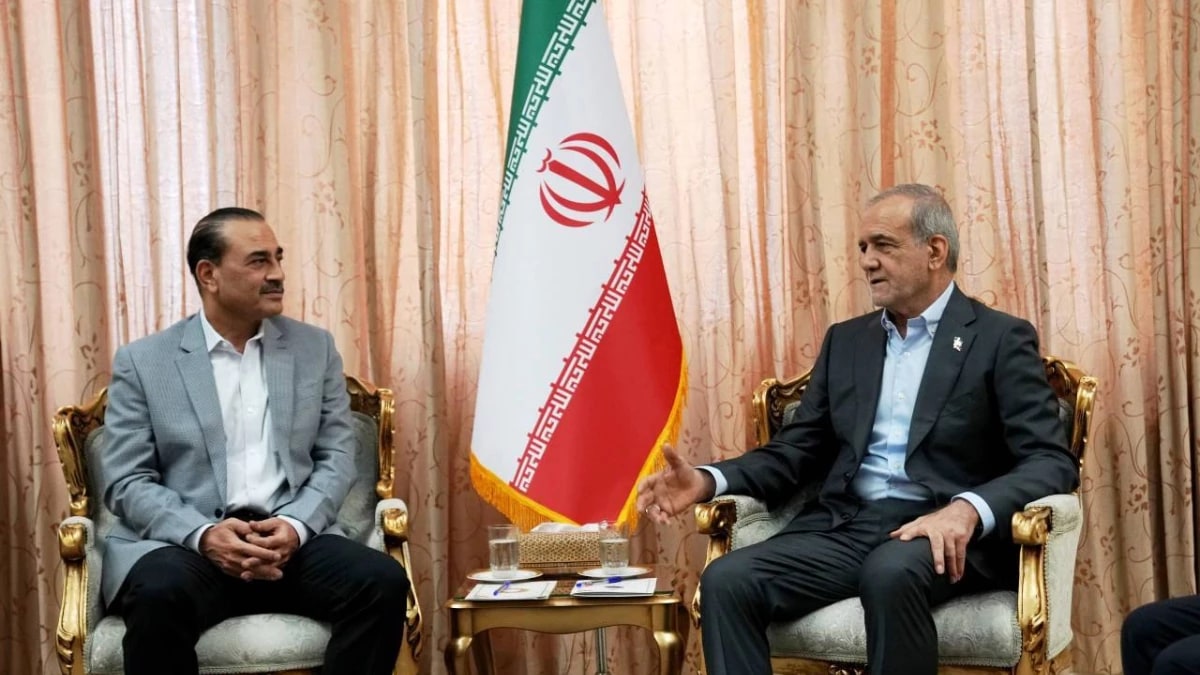
There’s no sign of disruption now. But it’s one more reason why Pakistan’s diplomacy matters: army chief Field Marshal Asim Munir is visiting Tehran today as part of Pakistan’s effort to restart US-Iran talks.
The bigger picture
Undersea cables are the hidden backbone of the internet, carrying the vast majority of data between countries. Iran’s message is that, in any new war, the fight wouldn’t stay at sea or in the air. It could reach the internet that banks, businesses and ordinary people rely on every day.
Sources
This story was researched and drafted with AI assistance, then checked and edited by our editor before publishing.